Showing posts with label review. Show all posts

Wednesday, 13 February 2013

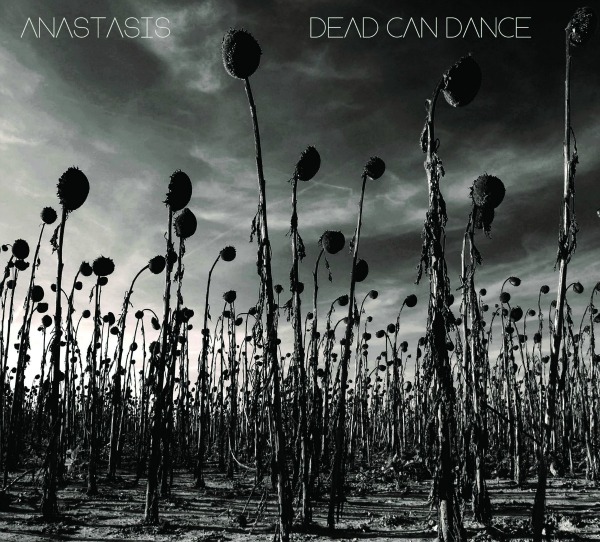
Album Review: Dead Can Dance.


DEAD CAN DANCE
ANASTASIS
2012, [PIAS] Records

This review was originally published on ToneDeaf.com.

It’s been 16 years since Brendan Perry and Lisa Gerrard, better known to their legions of fans as Dead Can Dance, released their last album,1996’s Spiritchaser.

After spending their post-DCD days focusing on solo albums, raising families and scoring films (Gerrard famously for Ridley Scott’s Gladiator), the gothic, exotic trance duo have returned to fine form with Anastasis, their ninth and arguably best studio album to date.

Glorious and poetically grand, Anastasis churns with an intensity woven throughout its eight tracks, with stories of rebirth, isolation, stoicism and identity. Dead Can Dance have always been a thinking person’s band, and this album is a virtual feast for the ears and the mind.

Opener “Children Of The Sun” is a psychedelic and cinematic paean to reincarnation, punched up by jazzy drums, sweeping strings and brassy horns.

“Agape” pays homage to Middle Eastern themes as Perry and Gerrard unhurriedly lure the listener through the darkened passageways and market stalls of a mysterious Persian city. Gerrard’s keening voice is like the vocal equivalent of “The Dance Of The Seven Veils” as every pinnacle and valley of her singing shine with unbridled strength.

“Opium”, the album’s darkest star, features Perry’s deep baritone accompanied by majestic synthesizers, dulcimers and tom-tom drums; “Return Of The She-King” begins life as an Irish sea shanty, but soon metamorphoses into a lush and epic theme of heroes and legends – reminding one, perhaps, of Basil Poledouris’s Orgy theme from Conan: The Barbarian.

You taught me patience was a virtue,” Perry intones solemnly on Anastasis’s closer, the appropriately titled “All In Good Time”: “So I took my time/let Nature take her course/all was revealed/all in good time.”

Truer words could not be sung. Anastasis is a damn revelation, and well worth the lengthy wait!

Here, for your general amazement, is the absolutely fabulous track, "Return Of The She-King". Enjoy!


Thursday, 16 December 2010

Recycled Post! Orchestral Manoeuvres in the Dark.

I swear this album just gives me shivers, it's so good. I've been incredibly busy juggling through the hoops set up by the Australian government in regards to immigrating, so I have to admit that I haven't been posting as much this month as I normally would. Don't worry, some new stuff is on its way! But for now, here's my review of "Organisation" by Orchestral Manoeuvres in the Dark -- probably one of my favourite albums of the '80s. Cheers, have a lovely day, blah blah blah. Talk soon.


Atmospheric. Majestic. Sombre. A dark-hearted cocktail of heartbreak and misery. With no further ado, I'd like to tell you, dear readers, about Orchestral Manoeuvres in the Dark's second album, Organisation. Released in October 1980, I would be tempted to say that this is probably their bleakest release, especially coming so soon on the heels of their much poppier eponymous debut (which, in essence, was basically a faithful reproduction of their live shows up to date). What's rather interesting about Organisation, now that I think of it, is how the entire affair begins: with the energetic and quite poppy "Enola Gay." I'm pretty sure everybody, at one point or another, has heard this classic anti-war track. As we all know, Enola Gay was the airplane (USAAF B-29 SuperFortress) that dropped the atomic bomb "Little Boy" on Hiroshima, Japan on the 6th of August, 1945, instantly vaporizing (and slowly killing) 140,000 citizens. Even due to its grim subject matter, it's certainly the catchiest single on the album. Such a juxtaposition - noodling synths, an immensely hummable tune, and snazzy drumbeats layered over lyrics such as "Is mother proud of Little Boy today?" and "Aha, this kiss you give, it's never ever gonna fade away." And now that that story has been told, it's time to move on to the rest of the album.


When the German experimentalist band Kraftwerk (more, much more, on them later) played in Liverpool, UK in the October of 1975, a certain spark was ignited in the imagination of one Andy McCluskey, who, immediately after the show, knocked on the backstage door and introduced himself to the band. According to Wolfgang Flür in the BBC Four documentary Synth Britannia, McCluskey had said, "We've just been shown the future - we're going to throw out all our guitars, and buy nothing but synthesizers TOMORROW!"

And how that inspiration shows, in Organisation! Andy McCluskey, his long-time partner in music Paul Humphreys, and the permanent replacement for their drum-machine (lovingly entitled "Winston"), Malcolm Holmes, came together and created an interesting hybrid of pop music, electronic experimentalism, and industrial chic - all thrown together with a punk-rock ethos of, in Humphreys's words, "just go out there and do it, already!"

So they did, and, in the heyday of synth-pop, they put out a piece of art that's nearly unprecedented in its audacity and originality. It practically goes without saying that the surge of brilliant synth-pop that launched from the UK was mightily helped by acts such as OMD and others that sprouted like wildflowers from the bleak Northern towns during the rubbish end of the '70s, when Victorian slums began to be ripped down and replaced by the narrow and grey concrete high-rises of modern-day England.

Take a fine track like "Statues." The KORG sends a seamless stream of smooth doom in the background, as finely tuned harpsichord synths pluck and bend in the fore. An organ-borne clickety-clack drumbeat pulls gently, as the most forlorn and defeated vocals I've ever heard sag like dead orchids.


What is faith
And when belief
And who knows how
These things deceive;
I never said,
And though I tried
If I could leave,
I'd sleep tonight.

 The song's just bloody haunting. There's such an imminent gloominess that lurks underneath everything, like a fungus you know grows under the most beautiful of gardens. And how the notes just hang there, and how, as the song fades into the ether, McCluskey's vocals just wail in pain, "I can't imagine how this ever came to be." Fade into nothing. Written as a post-humous dedication to Ian Curtis (15 July 1956 - 18 May 1980), I'd like to think that Ian himself would have been so fucking proud.

I'd like to make a quick side-note on how damn catchy "The More I See You" is, before I move on to the highlight of the album - "Stanlow." "The More I See You" is a subtle and somewhat funky marriage between Kraftwerk and Gary Numan. This immensely hummable track practically dares you not whistle its charms after hearing its lovely lilts and turns. It's also the only cover on the album, based on the 1945 single by Harry Warren and Mack Gordon. Like I said earlier in this paragraph, it's as catchy as all hell, and sometimes I'll find myself attempting to play the imaginary keyboard on the edge of my desk! Great love song, filtered through the emotive lens of early '80s synth-pop.

Which brings us to the final song on the album (unless you happen to purchase the remastered 2003 version, which has six extra tracks on it, including a nifty re-working of their first single, "Electricity"), "Stanlow." It's certainly rare to hear a love-song devoted to an oil refinery near Liverpool Bay, Merseyside, but here you have one. At six minutes, forty-one seconds long (of which the first two and a half minutes are comprised almost entirely of samples taken from within the refinery itself!), this is ... well, it's fucking amazing, is what it is.

I - I just can't do it justice. I'll let the final lyrics set the tone.
A morning comes just as it left

The warmer feeling seldom owned
And tonight all I see alone
And as she turned we always knew
That her heart was never there.

What does it all mean? Frankly, I've never been to Stanlow, nor have I experienced what it meant to have it in such close confines during the waning years of the '70s. But it must have been one hell of a landmark, to be honest, to have inspired such a beautiful, heartfelt paean. And, just when the lyrics and music fade away, the intense, heartless churning of the machine takes over once again and slowly disappears, as if into the River Mersey.
And this is one hell of an amazing album. And that, dear readers, is what I think of when I think of Organisation.

And I leave you now with OMD performing "Statues" in 1981. Enjoy, dear readers, and have good dreams.


Tuesday, 19 January 2010

Review: Roulette.

Today, for your electronic music consideration, I would like to introduce you to a fantastic and shimmery record from Cicada, Roulette. Based out of London, England, Cicada consists of producers extraordinaires Aaron Gilbert (AKA Mr Natural) and Alex Payne, with the beautiful Heidrun Björnsdottir from Iceland taking reins of the vocals.

When I listen to Roulette, many words spring to mind. "Lush" would be one of them. So would "energetic," "playful," "sleek," and, my favorite, "soulful." (And, yes, I am a fan of the Oxford comma.) There's just so much to be found here in this sonic landscape, and I have made it my duty today to spread the gospel and explain the myriad reasons as to why you should include this sparkling gem in your record collection. So let's go, shall we?

Opening track "Falling Rockets" starts the proceedings off with a bang (sorry), launching (sorry again) from the speakers with all its electro-disco arsenal blazing. Beginning with shadowy and mysterious sound-effects that whisper in the ether, it then introduces a crisp and driving drumbeat that propels the listener into a series of whirlwind synthesizers that nicely complement Björnsdottir's dreamily icy (think of a Scandinavian Blondie) voice. Exciting stuff, this. When she sings, "So this is what they call entertainment!", hardly ever has a statement seemed so completely apt.

Coming up immediately, the funky grooves of "Metropolis" (their first single off the album) begin to wend their way into your ear. The technological imagery of the lyrics match the notes with a singular perfection that's screaming to be turned up, loudly. There's an edge of wistful melancholy to be had here, as well as some nifty sci-fi synthesizer effects floating around like abandoned satellites whizzing through the expanses of space. It's catchy and heart-felt in equal measures, and I can listen to it over and over again without it once getting boring or old.

For my money, I'd like to nominate track number three, "One Beat Away," as the standout song on Roulette. You've got some grooving guitar bits jangling in the back with a fantastic disco beat and a rolling bass line throbbing like a freight train - it's wonderful to listen to. And when the chorus sets in with a rousing "Oh, oh, oh, oh-oh-oh!" rising analog synths squelch in the background and raise this track to some serious heights. When they perform "One Beat Away" live, it's a veritable show-stopper, complete with an audience sing-along.

Roulette even features a couple of guest vocalists! Björn Synneby from the Swedish dance band Pacific! takes hold of the R&B-tinged "Talking," and Tom Smith of Editors lends his silver tongue to the rainy-day doldrums of the provocative "Executive." The latter of the two has a bit of a darker heart; with a lonely piano, a sexy bass, and the sampled sounds of an office interspersed throughout. Listening to it now, it really strikes a nerve - I think it would make wonderful bad-weather music!

There is a smorgasbord of highlights on Roulette that make it, in my opinion, perfect for listening all the way through, from front to back. There's the jumpy and fun "Psycho Thrills," a pure frolic with a disco heartbeat; "Don't Stare At The Sun," a track that proudly wears its 1980's synth-pop influences on its sleeve; and then there's the beautiful and vaguely sad "Green Light." Frankly, there's not a bum song on this album. I heartedly recommend it to one and all. It's geared to be a dance classic, one that starts off with a bang (sorry a third time) and doesn't lose sight of its aspirations once during its hour-long duration. Monsieurs Gilbert and Payne, with the gorgeous Ms Björnsdottir have knocked this one out of the park, and then some.

From Roulette, here's Cicada and the single "Metropolis."


... And here is "Psycho Thrills," as well!